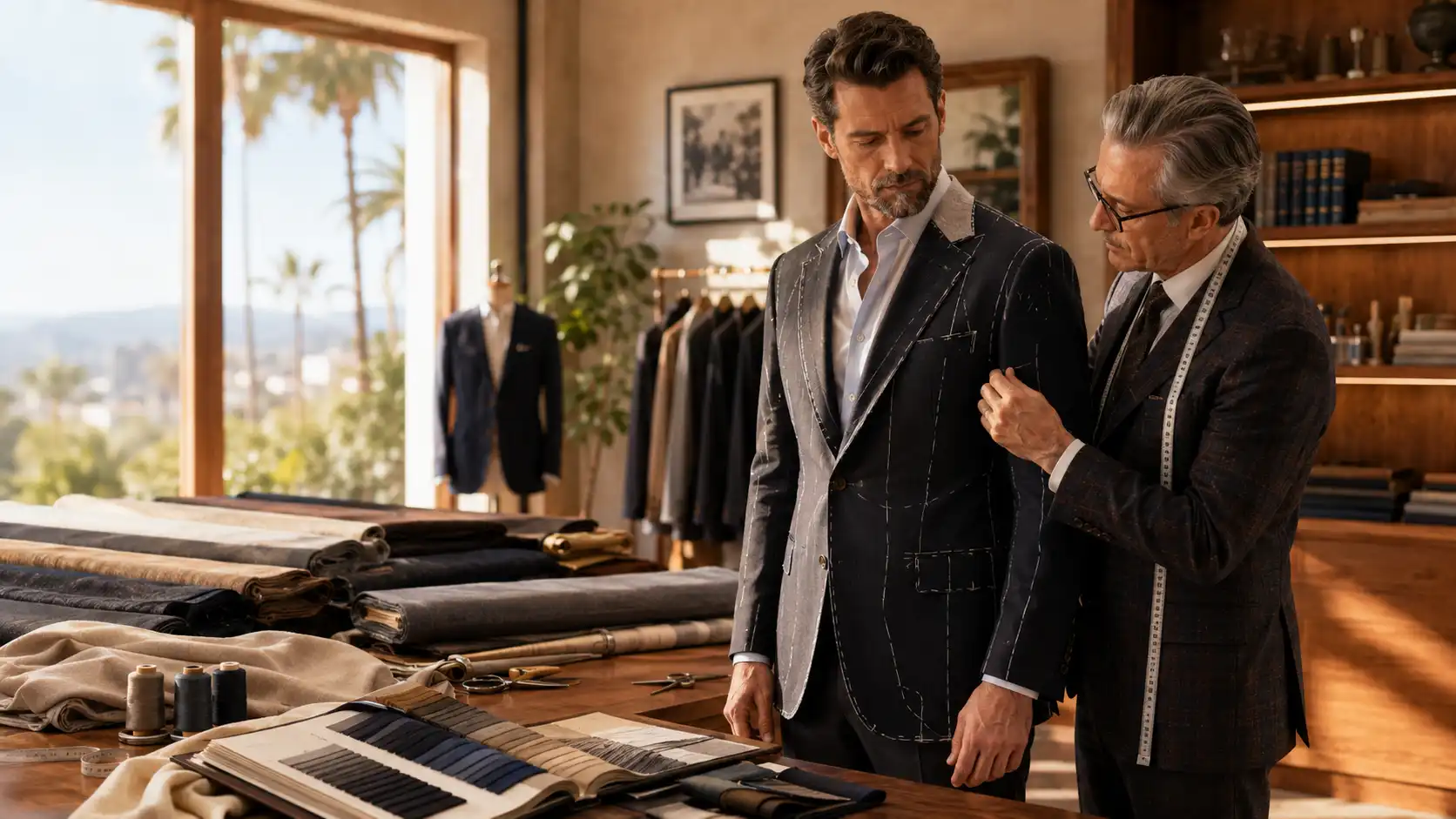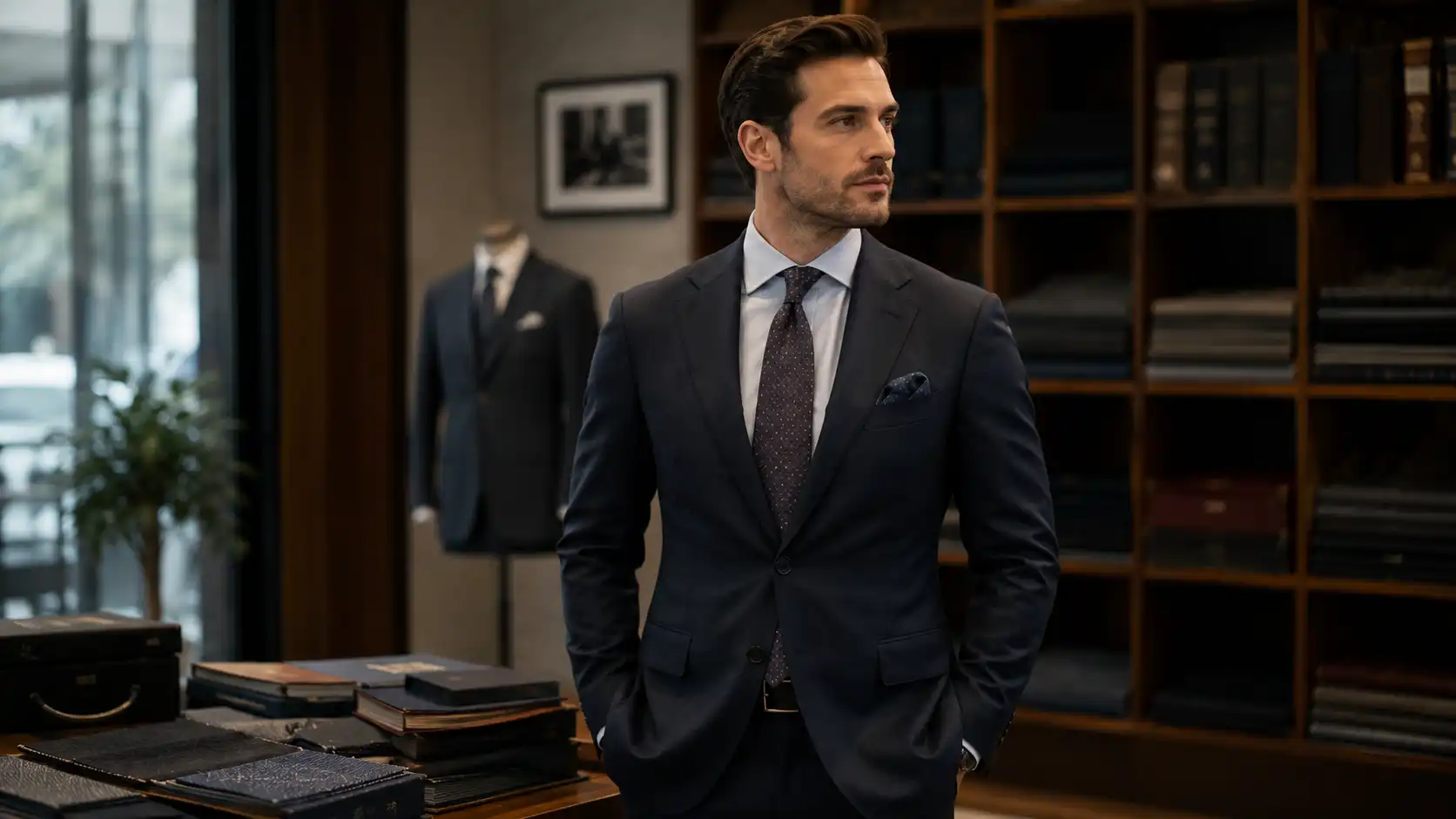
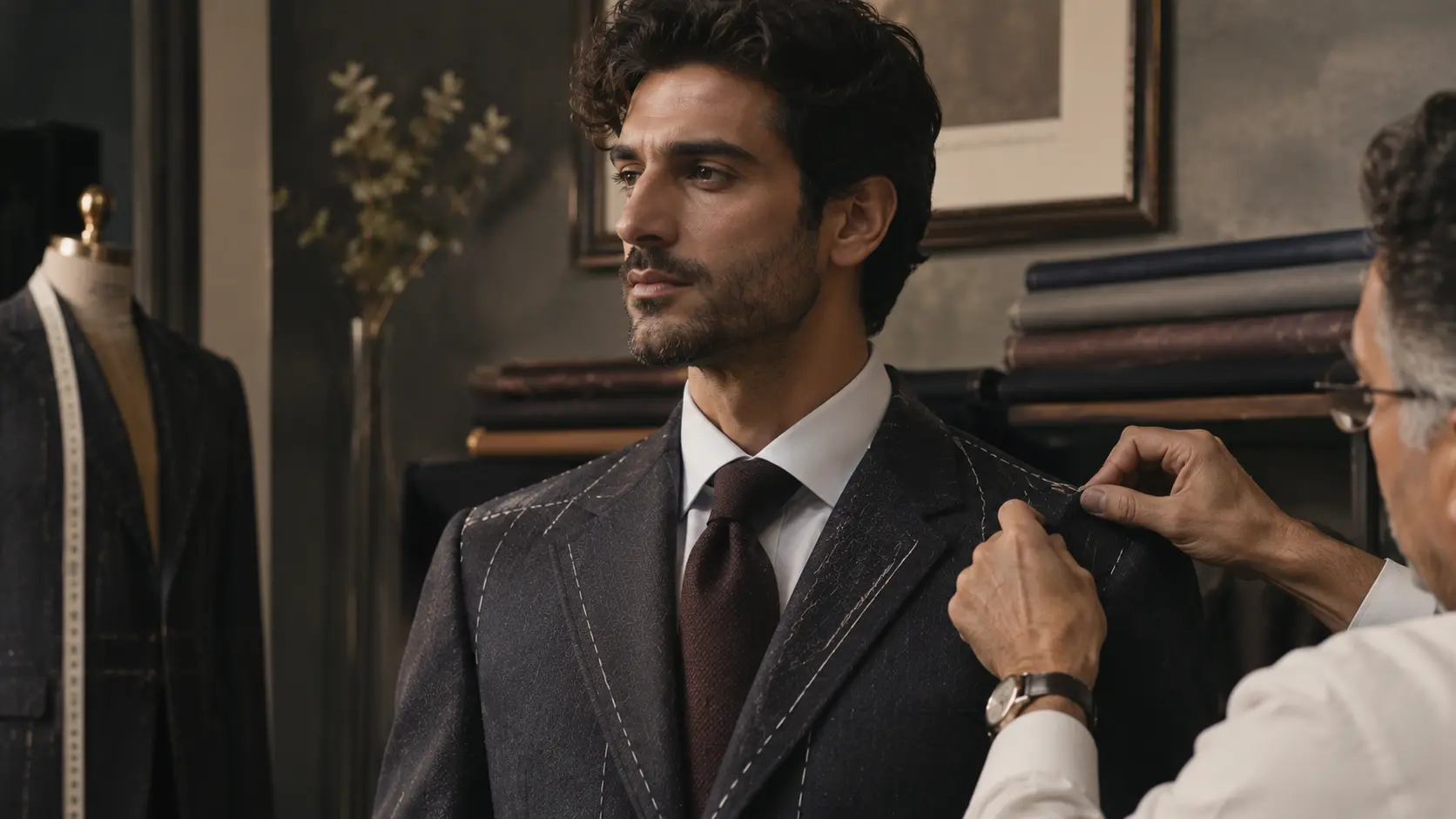
A suit is one of the most visible elements of a man’s wardrobe. It can influence how he presents himself professionally, how comfortably he moves, and how confidently he dresses for important occasions.
While ready-to-wear options offer convenience, they are designed around standardized proportions and established designs. Bespoke tailoring takes a different approach, creating a garment around the individual rather than asking the individual to adapt to the garment.
But what makes a bespoke suit worth commissioning?
The answer goes beyond fit. It lies in the combination of individual design, considered fabric selection, and a garment created with a specific person and purpose in mind.
1. A Suit Designed Around Your Proportions
Standard sizing cannot account for every difference in body shape. Shoulder width, posture, chest proportions, sleeve length, and trouser fit can all influence how a suit sits.
Bespoke tailoring allows these individual considerations to inform the garment’s pattern and design.
The result is a suit intended to complement your proportions rather than simply fit within a standard size category.
This can make a meaningful difference in both appearance and comfort, particularly for men who regularly struggle with off-the-rack tailoring.
2. Greater Control Over Fabric Selection
Fabric influences how a suit looks, feels, and performs.
With bespoke tailoring, you can consider materials according to your climate, intended use, and personal preferences. A lightweight wool may suit regular professional wear, while a textured fabric may be more appropriate for social occasions.
You can also explore different colors, patterns, and finishes rather than choosing only from the fabrics available in a finished garment.
The value lies in selecting a fabric that works for your wardrobe, not simply choosing the most expensive option.
3. Design Decisions That Reflect Your Style
A bespoke suit offers greater control over the details that define its character.
These choices may include:
- Lapel shape and width
- Jacket length and shoulder structure
- Pocket styles and placement
- Button material and finish
- Lining and interior details
- Trouser rise, pleats, and silhouette
Each decision contributes to the overall appearance of the garment. The objective is to create a cohesive design that reflects your preferences without relying on unnecessary embellishment.
4. A Garment Created for Its Intended Purpose
A suit for daily business wear has different requirements from one commissioned for a wedding, formal dinner, or special event.
The frequency of use, setting, and expected level of formality should influence the design.
For example, a professional wardrobe may benefit from a versatile navy or charcoal suit, while a special-occasion commission may allow more distinctive fabric and design choices.
Bespoke tailoring makes it possible to consider these requirements from the beginning, rather than adapting a standard garment to a specific purpose.
5. A More Considered Long-Term Wardrobe Choice
A bespoke suit can become a valuable part of your wardrobe when its design, fabric, and fit are chosen with regular use in mind.
Versatile colors, balanced proportions, and thoughtful construction can help a garment remain relevant beyond a particular season.
However, bespoke does not automatically mean better longevity. Fabric quality, construction, frequency of wear, and maintenance all influence how long a suit remains in good condition.
The strongest investment is one that reflects how you actually dress and the occasions for which you need tailoring.
Is Bespoke Tailoring the Right Choice for You?
Bespoke tailoring may be worth considering if you:
- Find it difficult to achieve a comfortable fit with standard sizing.
- Have specific preferences regarding silhouette, fabric, or design.
- Wear suits regularly for professional or social occasions.
- Want greater involvement in the decisions behind your clothing.
It may be less necessary if you rarely wear suits or are satisfied with the fit and selection available through ready-to-wear options.
The decision should be based on your requirements, not simply the appeal of owning something custom-made.
Commissioning a Suit That Feels Distinctly Yours
What makes a bespoke suit worth commissioning is the opportunity to bring fit, fabric, design, and personal preference together in one garment.
It is not about adding the greatest number of details or choosing the most expensive cloth. It is about making considered decisions that result in a suit suited to the individual wearing it.
At Michael Sahi, a private consultation offers an opportunity to explore fabric options, discuss design preferences, and consider the details that will shape your suit.
Because good tailoring should do more than meet expectations. It should reflect the person for whom it is created.
Frequently Asked Questions
1. What makes a bespoke suit worth commissioning?
A bespoke suit offers individual pattern development, greater control over fabric and design choices, and tailoring based on the wearer’s proportions. Its value depends on how well these advantages meet your needs.
2. Are bespoke suits better than ready-to-wear suits?
They serve different purposes. Bespoke suits offer greater personalization and individual fit, while ready-to-wear suits provide convenience and generally lower upfront costs. The right choice depends on your preferences and budget.
3. How is a bespoke suit personalized?
Personalization can include fabric, color, silhouette, lapels, pockets, buttons, lining, and trouser details. These choices are made to create a cohesive garment that reflects the wearer’s preferences.
4. Are bespoke suits suitable for everyday business wear?
Yes. A versatile fabric, practical design, and comfortable fit can make a bespoke suit suitable for regular professional use.
5. Does a bespoke suit last longer than a ready-to-wear suit?
Not necessarily. Longevity depends on fabric quality, construction, frequency of wear, and maintenance rather than whether a suit is bespoke or ready-to-wear.
6. What should I consider before commissioning a bespoke suit?
Consider your budget, intended use, preferred silhouette, fabric requirements, and the tailoring process. Understanding these factors will help you make a more informed decision.