An autumn wedding gives a groom something that summer weddings often don’t: room to work with texture, depth and richer tailoring.
Heavier fabrics become more comfortable. Deeper colors feel natural. Layering becomes easier. And details that might feel excessive in warmer months can suddenly look considered.
But dressing for an autumn wedding isn’t simply about choosing a darker suit.
The fabric, color, construction and fit should all work with the setting and, most importantly, with the groom.
Start With the Wedding, Not the Suit
Before choosing a fabric or color, consider the wedding itself.
• Is it a formal evening celebration or a daytime ceremony?
• Is it taking place indoors, outdoors or across multiple settings?
• Is the dress code black tie, formal or more relaxed?
• And what is the overall character of the wedding?
A sophisticated autumn wedding might call for a deep navy or charcoal suit. A more relaxed celebration may allow warmer browns, textured fabrics or subtle patterns.
The goal is not to make the suit look “autumnal.” It is to make sure the suit belongs naturally in the setting.
Choosing the Right Fabric for an Autumn Wedding
Autumn is an excellent season for fabrics with more texture and structure.
Wool remains one of the most versatile choices because it can provide warmth, structure and a refined drape without making the suit feel unnecessarily heavy.
Depending on the setting and temperature, you can also consider fabrics such as:
• Flannel
• Wool blends
• Tweed
• Textured wool
• Lightweight brushed fabrics
The right choice depends on more than the season.
A groom getting married in a warm climate may still need a lighter-weight fabric, while an outdoor wedding in a cooler setting can accommodate something more substantial.
This is where fabric selection should be based on comfort as well as appearance.
You will be wearing the suit for hours. It should feel as good as it looks.
When Should You Wear a Tuxedo?
A tuxedo is most appropriate when the invitation specifies black tie. That is the clearest indication that eveningwear is expected.
Black-tie events may include:
• Formal evening weddings
• Galas
• Formal charity events
• Certain awards ceremonies
• Formal dinners
• Black-tie celebrations
• Some high-end social events
If the invitation says Black Tie, take it seriously. This isn’t the moment to reinterpret the dress code because you happen to own an excellent navy suit.
The tuxedo is part of the social language of the event.
Autumn Wedding Suit Colors
Autumn naturally lends itself to deeper, more sophisticated colors.
Classic options include:
• Navy: A dependable choice that works across formal and semi-formal weddings. It is particularly versatile if you want the suit to remain useful after the wedding.
• Charcoal: Refined and understated, charcoal works particularly well for formal weddings and evening celebrations.
• Deep Brown: Brown can introduce warmth and texture without becoming overly seasonal.
• Burgundy or Deep Wine: Better suited to grooms who want more personality while maintaining a sophisticated appearance.
• Forest or Deep Green: A more distinctive option that can work beautifully with autumn surroundings when handled carefully.
Color should still be considered alongside the venue, wedding palette and level of formality.
A strong suit color is one that complements the occasion without competing with everything around it.
Don't Ignore the Texture
Autumn is one of the best seasons to introduce texture into formalwear.
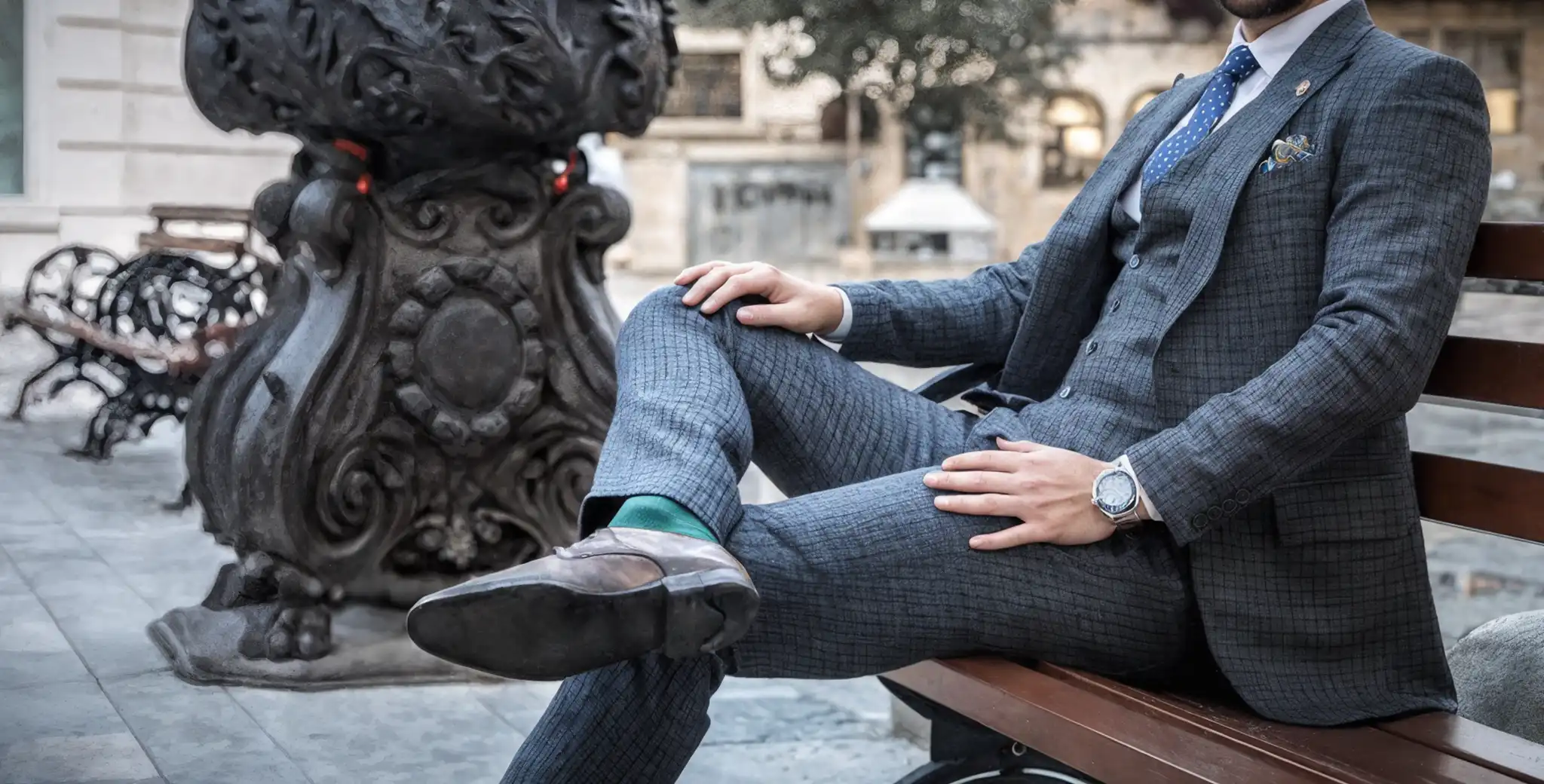
• A textured wool can create visual depth without requiring a bold pattern.
• Flannel can provide a softer, more substantial appearance.
• A subtle weave can make a relatively simple navy or charcoal suit feel more distinctive.
This is often more sophisticated than simply choosing a brighter color. The difference is subtle.
But subtle differences are often what make a tailored suit feel considered.
What Suit Style Works Best for a Groom?
There is no single “autumn wedding suit.” The right silhouette depends on the groom’s proportions, the dress code and the character of the wedding.
A single-breasted suit remains the most versatile option.
A double-breasted jacket can create a stronger, more structured silhouette and can be particularly effective for a formal wedding.
Peak lapels can add presence, while notch lapels tend to feel more understated and versatile.
The important thing is proportion.
The lapel, shoulder, jacket length and trouser shape should work together rather than being selected independently.
A groom’s suit should look intentional without looking like it is trying too hard.
Fit Matters More on Your Wedding Day
Wedding photographs have a way of making small fit problems much more noticeable.
• A shoulder that extends too far.
• A collar that pulls away from the neck.
• Sleeves that are too long.
• A jacket that sits incorrectly when buttoned.
• Trousers that break too heavily over the shoe.
These may seem like minor details. They aren’t.
The groom will be photographed standing, sitting, walking, greeting guests and embracing people throughout the day.
A good wedding suit needs to work through movement, not just look good while standing still.
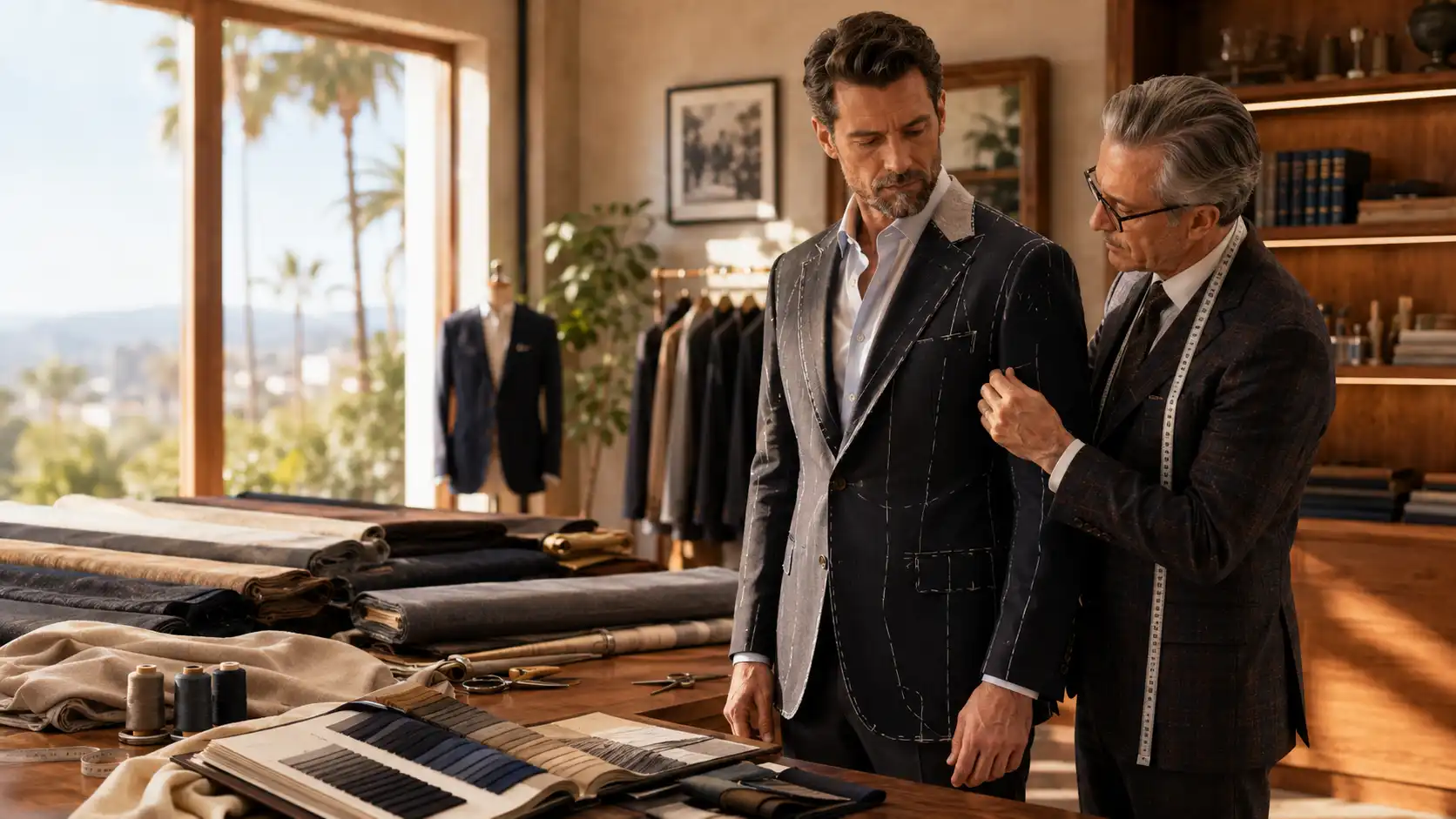
That is one of the advantages of bespoke tailoring.
The garment can be considered around the individual’s proportions rather than adjusted from a predetermined size.
Should the Groom Match the Wedding Party?
Coordination is useful. Matching everything is not.
Your suit should work with the broader wedding palette, but it does not need to replicate the bridesmaids’ colors or the wedding décor.
Instead, think about complementary tones.
If the wedding uses warm autumn colors, a navy, brown, charcoal or deep green suit can sit naturally within that palette.
Accessories can then provide smaller points of connection through the tie, pocket square or other details.
The groom should look like part of the wedding—not like another piece of the decoration.
Consider the Entire Look
A wedding suit doesn’t exist on its own.
The shirt, shoes, tie, pocket square and other accessories all influence the final impression.
For an autumn wedding, texture can be introduced through accessories as well.
• A textured tie can add depth to a simple suit.
• A pocket square can provide a restrained connection to the wedding palette.
• Leather shoes can introduce warmth when paired with the right suit color.
The key is restraint.
If every element is trying to make a statement, the overall look quickly becomes busy.
The Suit Should Outlast the Wedding
Your wedding suit is an emotional purchase. But it doesn’t have to become a one-day garment.
One of the strongest reasons to choose classic tailoring is the possibility of wearing it again.
A well-made navy, charcoal or deep brown suit can work for:
• Formal dinners
• Business occasions
• Celebrations
• Professional events
• Future weddings
• Important social occasions
This is worth considering when choosing the fabric and design.
The question isn’t only: “Will this look good in my wedding photographs?”
It is also: “Will I still want to wear this five years from now?”
That question tends to lead to better decisions.
Bespoke Tailoring for the Groom
A groom’s suit has an unusually demanding job.
It needs to photograph well, feel comfortable for long periods, complement the wedding and reflect the person wearing it.
That makes the details important. The right fabric. The right color. The right silhouette. And, above all, the right fit.
Bespoke tailoring allows these decisions to be considered together rather than treating the suit as a collection of separate choices.
The result should not simply look like a wedding suit. It should look like your suit.
When you’re ready to create a wedding suit around your proportions, personal style and the character of your celebration, a private consultation is the right place to begin.
When in doubt, a well-fitted dark suit is often a strong starting point for formal occasions that do not explicitly require black tie.
Frequently Asked Questions
1. What is the best color for an autumn wedding suit?
Navy, charcoal, deep brown, forest green and other rich tones can work particularly well for autumn weddings. The best choice depends on the dress code, venue, time of day and overall wedding palette.
2. What fabric is best for an autumn wedding suit?
Wool is one of the most versatile choices. Depending on the climate and venue, textured wool, flannel or other slightly heavier fabrics can add warmth and depth. The fabric should ultimately be chosen according to both comfort and setting.
3. Can a groom wear a brown suit to an autumn wedding?
Yes. Brown can work particularly well for an autumn wedding because of its warmth and versatility. The shade and styling should be appropriate for the formality of the event.
4. Should an autumn wedding suit be darker?
Not necessarily. Deeper colors naturally complement the season, but the venue, time of day and dress code matter more than following a seasonal rule.
5. Should the groom’s suit match the wedding colors?
It should coordinate with the wedding rather than necessarily match it. The suit can complement the broader palette through its color and accessories without looking identical to the décor or wedding party.
6. Is a bespoke suit worth it for a wedding?
For a groom who wants a highly personalized fit and intends to wear the suit beyond the wedding, bespoke tailoring can be particularly valuable. It allows proportions, fabric, construction and styling to be considered together rather than simply selecting a standard size.