When you’re invited to a formal event, the difficult part isn’t always choosing what looks good. It’s knowing what is appropriate.
A well-made suit can look exceptional and still be the wrong choice for a black-tie event. A tuxedo can be perfectly correct in one setting and unnecessarily formal in another. A dinner jacket can strike the right balance but only when the occasion calls for it.
The distinction comes down to more than color.
Fabric, lapels, shirt, trousers, footwear, accessories, time of day and, most importantly, the event’s dress code all influence how formal an outfit feels.
Understanding those differences makes dressing for formal occasions much easier.
So, when should you wear a tuxedo, a suit or a dinner jacket?
Let’s start with the most important distinction.
Formality Comes Before Personal Style
One of the easiest mistakes to make with formalwear is starting with personal preference.
You might prefer navy. You might prefer a double-breasted jacket. You might like a particular pair of loafers.
But formal dressing works differently. The first question should be: What does the occasion require?
Only after you understand the level of formality should you decide how you want to interpret it.
Think of formalwear as a spectrum.
At one end, you have a conventional tailored suit that can adapt to business, weddings, dinners and other social occasions.
At the more formal end, you have eveningwear designed specifically for black-tie settings.
The dinner jacket sits somewhere in between depending on how it is styled and the occasion.
The goal isn’t to dress as formally as possible. The goal is to dress appropriately.
What Is the Difference Between a Suit and a Tuxedo?
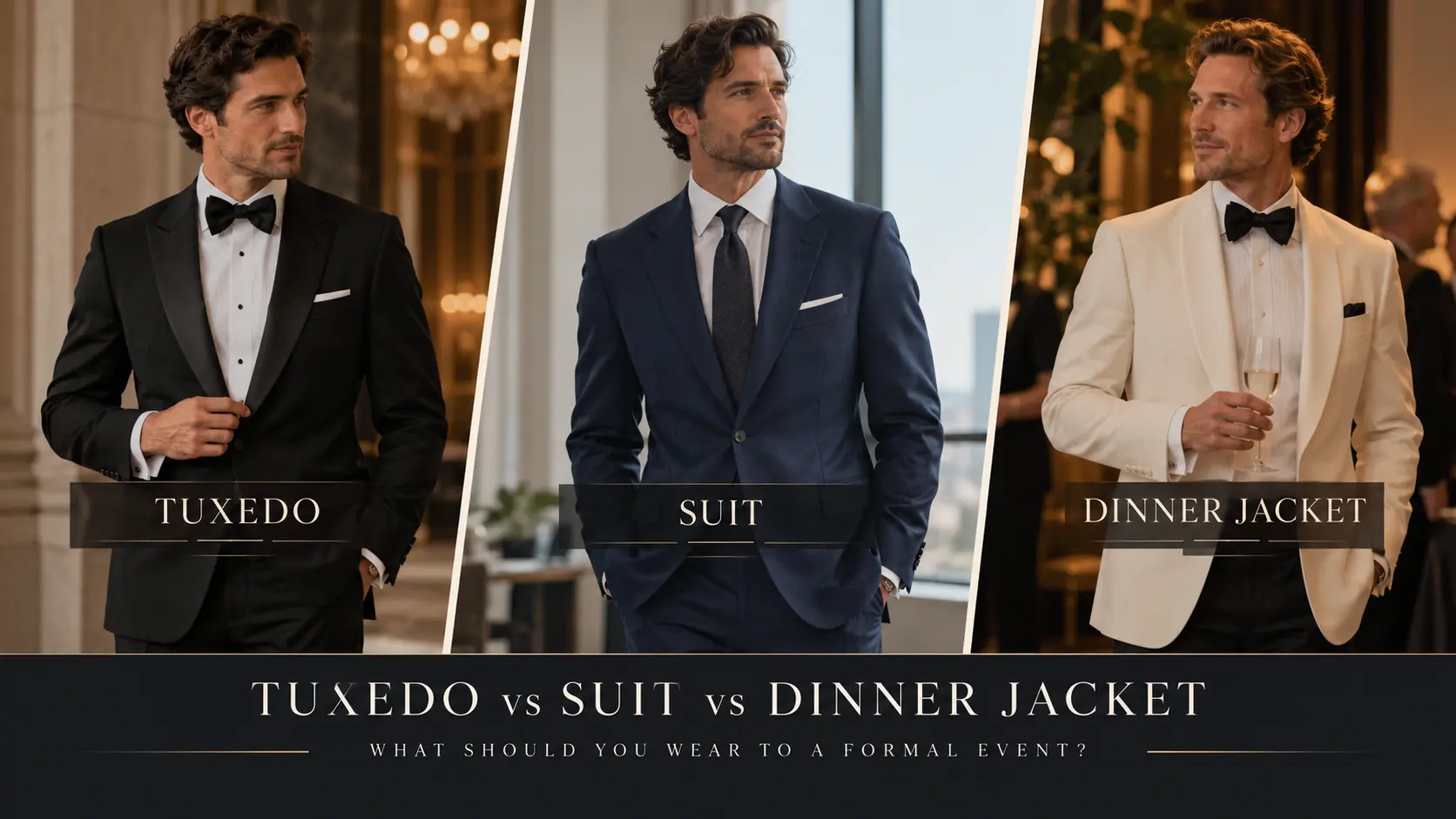
The simplest distinction is this: A suit is versatile formal clothing. A tuxedo is eveningwear with a more specific purpose.
A traditional suit generally consists of a matching jacket and trousers made from the same fabric.
The jacket may have notch or peak lapels, and the overall styling can range from conservative business tailoring to something more relaxed and contemporary.
A tuxedo is more specific. Traditionally, it features details such as:
• Satin or silk-faced lapels
• Matching satin detailing on the trousers
• A more formal shirt
• Formal evening footwear
• A bow tie rather than a conventional necktie
The overall effect is intentionally cleaner and more formal. A tuxedo isn’t simply a black suit.
That distinction matters. The details are what signal that the garment belongs to eveningwear rather than conventional tailoring.
When Should You Wear a Tuxedo?
A tuxedo is most appropriate when the invitation specifies black tie. That is the clearest indication that eveningwear is expected.
Black-tie events may include:
• Formal evening weddings
• Galas
• Formal charity events
• Certain awards ceremonies
• Formal dinners
• Black-tie celebrations
• Some high-end social events
If the invitation says Black Tie, take it seriously. This isn’t the moment to reinterpret the dress code because you happen to own an excellent navy suit.
The tuxedo is part of the social language of the event.
What Makes a Tuxedo Look Right?
The individual pieces need to work together. A traditional black-tie look typically includes:
• Tuxedo jacket: Usually black or midnight blue, with a satin or silk-faced lapel.
• Tuxedo trousers: Matching trousers with a satin stripe running down the outside seam.
• Formal shirt: A proper evening shirt rather than a standard business dress shirt.
• Bow tie: Traditionally black.
• Formal shoes: Black formal footwear that complements the level of dress.
• Minimal accessories: The more formal the event, the less you need to rely on accessories to create visual interest.
The goal is restraint. A tuxedo should not need to announce itself.
What Is a Dinner Jacket?
A dinner jacket is an evening jacket that is typically worn with contrasting trousers rather than matching trousers. This is where many men become confused.
A dinner jacket is not simply a tuxedo jacket worn incorrectly. It is a distinct way of dressing for evening occasions.
One classic example is a white or ivory dinner jacket paired with black formal trousers.
This can create a lighter, more relaxed interpretation of eveningwear while still looking sophisticated.
Dinner jackets can also be made in other colors, textures or fabrics, depending on the event.
But there is an important distinction: The more unconventional the dinner jacket becomes, the more important the setting becomes.
A velvet dinner jacket might look excellent at a private evening celebration. It may look completely out of place at a conservative black-tie event.
When Should You Wear a Dinner Jacket?
Dinner jackets work particularly well for evening social occasions where formal dressing is expected but the setting allows a little more personality.
Think:
• Evening receptions
• Private dinners
• Formal celebrations
• Certain weddings
• Cocktail or black-tie-adjacent events
• Elegant resort or destination occasions
The invitation remains your first reference point.
If the dress code specifically says black tie, a conventional tuxedo is usually the safest interpretation.
If the event is formal but the dress code leaves more room for interpretation, a dinner jacket can provide a sophisticated alternative.
This is where judgment matters more than simply following a formula.
When Is a Suit the Better Choice?
The suit is the most versatile of the three. A well-cut dark suit can work for a surprisingly wide range of occasions.
Depending on the event, you might wear:
• Navy
• Charcoal
• Deep gray
• Dark brown
• Subtle patterns
• Seasonal fabrics and colors
A suit is usually appropriate for occasions such as:
• Business dinners
• Professional events
• Weddings without black-tie requirements
• Formal daytime events
• Evening dinners
• Cocktail occasions
• Social events where formal tailoring is appropriate
But not every suit is equally formal. A lightweight linen suit and a dark worsted wool suit may both technically be suits, but they communicate very different levels of formality.
Suit vs Tuxedo: The Details Matter
Consider two men attending an evening event.
One wears a dark navy suit with a white shirt, silk tie and polished black shoes. The other wears a black tuxedo with satin-faced lapels, a formal shirt and black bow tie.
Both are wearing tailored clothing.
But they are communicating different levels of formality. The difference comes from the details.
Lapels
Suit lapels are commonly notch or peak lapels. Tuxedos traditionally use satin or silk-faced lapels, often in a peak or shawl shape.
Trousers
Suit trousers are made from the same cloth as the jacket. Tuxedo trousers traditionally include a satin stripe and are designed as part of the eveningwear ensemble.
Shirt
A suit can be worn with a conventional dress shirt. A tuxedo calls for a more formal evening shirt.
Neckwear
A suit generally calls for a necktie or, depending on the setting, no tie. A traditional tuxedo calls for a bow tie.
Shoes
Suit footwear can range considerably depending on the event. Tuxedo footwear should maintain the same formal character as the rest of the outfit.
None of these details exists in isolation. It’s the combination that creates the overall impression.
What About a Black Suit?
This is one of the most common points of confusion. A black suit is not automatically a tuxedo.
A black suit may have:
• Standard wool trousers
• Conventional lapels
• A standard dress shirt
• A regular tie
• Traditional suit construction
A tuxedo has a different visual language. The lapel treatment, trouser detailing, shirt, accessories and overall styling distinguish it from a standard suit.
So if an invitation says black tie, don’t assume that a black business suit is an equivalent substitute. It may look formal. It simply isn’t the same thing.
Can You Wear a Tuxedo to a Wedding?
Yes but the invitation matters.
If the wedding specifies black tie, a tuxedo is exactly the kind of outfit the dress code calls for.
If the wedding is simply described as formal, black tie optional, cocktail or evening formal, there may be more room for interpretation.
This is where the location and character of the wedding also matter.
A formal ballroom wedding in the evening calls for a different approach from a daytime outdoor wedding.
The same principle applies to destination weddings.
A tuxedo may be entirely appropriate for an elegant evening celebration while being unnecessarily formal for a relaxed daytime ceremony.
The objective is not to look like the best-dressed person in the room at any cost.
It’s to look like you understand the room.
What Should You Wear If the Dress Code Says "Formal"?
“Formal” can be less precise than “black tie.” If the invitation simply says formal attire, consider:
• Time of day: Evening events generally allow for darker and more formal clothing.
• Venue: A ballroom, private club or upscale hotel creates a different context from an outdoor venue.
• Event type: A wedding, corporate dinner and charity gala may all use the word “formal” while carrying different expectations.
• Host: If you’re unsure, asking the host is better than guessing.
When in doubt, a well-fitted dark suit is often a strong starting point for formal occasions that do not explicitly require black tie.
What If the Invitation Says "Black Tie Optional"?
This dress code gives you more flexibility. A tuxedo is appropriate. A dark, formal suit can also work.
The key is understanding that “optional” does not mean casual. If you choose a suit, keep the overall outfit appropriately formal.
That generally means:
• Darker colors
• Refined fabric
• Clean tailoring
• Formal footwear
• Conservative accessories
A business suit can be made more evening-appropriate, but there is a difference between adapting a suit for an evening event and simply wearing your Monday-to-Friday office outfit.
Don't Let Accessories Compete With the Occasion
Formal dressing doesn’t require more accessories. It requires better judgment.
A tuxedo already carries considerable visual information. Adding an oversized watch, excessive jewelry, bright pocket squares and attention-grabbing footwear can quickly move the outfit away from understated elegance.
This doesn’t mean formalwear has to be boring. It means personality should be expressed through proportion, texture and subtle details rather than visual noise.
The best formal outfits often feel almost effortless. Nothing is fighting for attention.
Tuxedo vs Suit vs Dinner Jacket: A Simple Decision Guide
• The invitation says Black Tie
• The event is a formal evening occasion
• You’re attending a gala or formal dinner
• The setting calls for traditional eveningwear
Choose a dinner jacket when:
• The event is an evening social occasion
• Formalwear is expected but there is some room for interpretation
• The venue and dress code allow more personality
• You want an elegant alternative to a conventional tuxedo
Choose a suit when:
• The event does not require black tie
• You’re attending a business or professional occasion
• The wedding or event calls for formal or cocktail attire
• You want something versatile that can work beyond one evening
And if the invitation gives you a specific dress code, follow that before anything else.
Final Thoughts
Formal dressing becomes much easier once you stop thinking about the individual garment and start thinking about the occasion as a whole.
The right question isn’t simply: “Which looks better—a tuxedo or a suit?”
It’s: “Which one belongs here?”
That is the foundation of good tailoring: understanding the person, the occasion and the details well enough that everything feels intentional.
Frequently Asked Questions
1. What is the difference between a tuxedo and a suit?
A tuxedo is formal eveningwear traditionally distinguished by details such as satin-faced lapels, matching trouser detailing and more formal accessories. A suit is more versatile and can be worn across business, weddings, dinners and other occasions.
2. Can I wear a black suit instead of a tuxedo?
A black suit is not the same as a tuxedo. If an invitation specifically requires black tie, a traditional tuxedo is the more appropriate choice. A black suit may be suitable for other formal occasions where black tie is not required.
3. When should I wear a dinner jacket?
A dinner jacket can work well for formal evening social occasions where the dress code allows some interpretation. A classic example is a contrasting dinner jacket worn with formal evening trousers. Always consider the invitation, venue and level of formality first.
4. Can I wear a tuxedo to a wedding?
Yes. A tuxedo is appropriate when the wedding calls for black tie or another sufficiently formal evening dress code. For daytime or less formal weddings, a well-tailored suit may be more appropriate.
5. Is a tuxedo more formal than a suit?
Generally, yes. A traditional tuxedo is designed specifically for formal eveningwear, while a suit can cover a much broader range of formal and professional occasions. However, the overall formality also depends on fabric, color, styling and accessories.
6. What should I wear if I am unsure about the dress code?
Start with the invitation and consider the time, venue and type of event. If the dress code is unclear, asking the host is usually the safest option. For many formal occasions that do not specifically require black tie, a well-fitted dark suit is a versatile choice.